

Which Intranet Platform Is Actually Best for Your Team in 2026?
Why Your Team Deserves a Digital Space That Actually Works
There is a particular kind of frustration that most employees know well: clicking through a company portal that loads slowly, looks like it was designed a decade ago, and buries the one document you need somewhere in a labyrinth of outdated folders. It is the digital equivalent of a neglected garden, full of overgrown paths and withered signposts. Nobody wants to spend time there, and so nobody does. Important updates go unread, culture quietly erodes, and productivity takes the kind of slow, quiet hit that never shows up on a single report but eventually shows up everywhere.
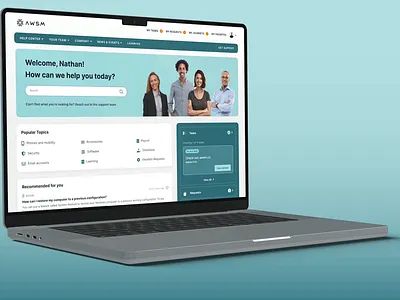
The good news is that the modern intranet landscape has changed dramatically. Think of a great employee experience platform the way you might think of a well-designed garden: when the conditions are right, the soil is healthy, the light is good, and everything has its proper place, the whole space becomes somewhere people genuinely want to be. Teams gather, ideas pollinate, and information flows naturally rather than getting lost in the weeds. Choosing the right platform is not about picking the most popular name or the flashiest feature list. It is about finding the environment where your specific team will naturally flourish.
This guide is here to make that process feel a lot less daunting. Rather than handing over an arbitrary ranked list and walking away, the goal here is to help internal communications managers, HR professionals, and IT leaders think clearly about what their teams actually need before a single demo gets booked. The perfect platform is out there. It just takes a little groundwork to find it.
Evaluating Your Current Digital Soil
Every experienced gardener knows that before you plant anything new, you need to understand what you are working with. The same principle applies beautifully here. Before falling in love with any particular intranet platform based on a glossy product video, it is worth pausing to take a clear-eyed inventory of your existing technology stack. What tools does your team already use every day? Which systems hold your HR data, your project management workflows, your file storage? The answers to these questions will quickly reveal which platforms can slot naturally into your environment and which ones will create more friction than they solve.
Company size and budget are equally important factors, and they are worth examining honestly rather than optimistically. A global enterprise with fifteen thousand employees spread across six countries has fundamentally different requirements than a nimble startup of fifty people sharing an open-plan office. Larger organizations often need granular permission structures, multilingual support, advanced analytics, and dedicated integration capabilities. Smaller teams, on the other hand, may thrive on something simpler, faster to implement, and easier to maintain without a dedicated IT team. Neither situation is better or worse. They are simply different soil types that call for different seeds.
It is important to think carefully about daily habits before committing to anything. If your team starts every morning in Microsoft Teams, an intranet that lives outside that ecosystem will always feel like an extra step. If your employees are comfortable with Google Workspace and live inside Gmail and Drive throughout the day, a platform that integrates tightly with those tools will see far stronger adoption. When teams ask themselves what is the best intranet platform?, the answer always depends entirely on the ecosystem your team already uses. There is no shortcut around this, and there really does not need to be.

Before booking a single demo, gather a small group of colleagues from across different departments and work through a simple checklist together. The answers will save weeks of wasted evaluation time and steer the selection process toward platforms that are genuinely worth exploring.
- What tools does your team use most every single day? (Email clients, messaging platforms, document storage, project trackers)
- Where do employees currently go to find HR policies, company news, and essential documents?
- How tech-savvy is your workforce on average? Would they welcome a feature-rich platform or would simplicity drive better adoption?
- Do you have dedicated IT resources to manage implementation and ongoing maintenance?
- What does your budget look like, including both the licensing fee and the hidden time cost of setup?
- Are most of your employees desk-based, or do you have a significant frontline or mobile workforce?
- What does success look like six months after launch? Higher engagement scores, lower support ticket volume, better culture metrics?
Perfect Matches for Microsoft Heavy Workplaces
For organizations that have built their working lives around Microsoft 365, the intranet decision has a natural gravitational pull toward tools that live within that same constellation. Microsoft Teams has become the default communication hub for millions of workers worldwide, and SharePoint has long been the backbone of document management and company portals for enterprise organizations. The question is not whether to use Microsoft’s ecosystem, but rather how best to work within it in a way that delivers a genuinely polished employee experience rather than a collection of awkward workarounds.
Building a custom SharePoint intranet from scratch is technically possible, but it requires significant time, design expertise, and ongoing development resource to maintain properly. Many organizations begin with good intentions and find themselves, two years later, with a portal that has already slipped back into the cluttered, unloved state they were trying to escape. Turnkey intranet platforms built specifically on top of Microsoft 365 offer a compelling alternative. These solutions come pre-designed with modern layouts, intelligent navigation, and tight integrations with Teams, SharePoint, and Entra ID (formerly Azure AD) already baked in. Employees sign in once and find everything waiting for them without the friction of separate passwords or disconnected portals. According to Gartner’s technology research, seamless integration with existing tools is consistently the number one driver of daily usage and long-term adoption success for employee experience platforms.
The comparison below offers a straightforward look at both approaches, which can help sharpen thinking before any serious conversations with vendors begin.
| Approach | Pros | Cons |
|---|---|---|
| Custom SharePoint Build | Fully tailored to specific needs; no additional licensing cost beyond Microsoft 365 | High development time and cost; requires ongoing IT maintenance; design quality varies widely |
| Turnkey Microsoft-Integrated Platform | Fast to deploy; polished out of the box; native Teams and Entra ID integration; lower IT overhead | Additional licensing fee; some customization limits depending on vendor |
Keeping Deskless and Frontline Staff Growing Together
Here is a challenge that does not get nearly enough attention in intranet conversations: the gap between office-based employees and the frontline workers who may never sit down at a desk. In retail, healthcare, logistics, manufacturing, and hospitality, a significant portion of the workforce operates entirely on mobile devices, often in fast-moving environments where they cannot pause to navigate a complex portal. If an intranet does not work brilliantly on a smartphone, it effectively does not exist for a large share of the team.
Robust, well-designed mobile applications are not a bonus feature for these organizations. They are the whole foundation. Frontline employees need to be able to check shift schedules, read important policy updates, submit HR requests, and receive urgent communications from a single, intuitive app that loads quickly even on slower networks. Push notifications are particularly valuable here, ensuring that critical safety updates, last-minute schedule changes, or urgent company announcements actually reach the right people in real time rather than sitting unread in a desktop inbox.
The cultural dimension of this challenge is equally important to address. When office workers receive polished, visually engaging company news through a beautifully designed intranet while frontline staff get the same information forwarded as a text message or posted on a physical noticeboard, it quietly communicates that some employees matter more than others. That kind of invisible division is corrosive to company culture over time. Choosing a platform that genuinely serves all employee types with equal care is one of the most powerful statements an organization can make about how it values its people.
When evaluating platforms for frontline suitability, keep the following features at the top of the list during every demo and trial period.
- A dedicated, high-quality mobile app (not just a mobile-responsive browser version)
- Push notification capabilities for urgent and time-sensitive communications
- Offline access so employees can read key documents even in low-connectivity areas
- Simple, icon-based navigation that does not require training to understand
- Multilingual support for diverse frontline workforces
- Easy access to HR documents, payslips, and leave requests directly from a mobile home screen
Fast Blooming Solutions for Agile Teams
Not every organization has six months to spare for a drawn-out implementation project. Smaller businesses, fast-scaling startups, and departments that need a solution up and running before the next quarter begins have a very specific set of requirements: something that works well, deploys quickly, and does not demand a full-time IT team to manage. The good news is that the market has responded. There are now a number of genuinely excellent cloud-based, turnkey intranet platforms that can go from signed contract to live environment in a matter of weeks rather than months.
These solutions typically come with professionally designed templates, pre-built page structures for news, policies, directories, and events, and intuitive content editors that allow non-technical communicators to keep the platform fresh without raising a single IT support ticket. The trade-off is occasionally less flexibility for deep customization, but for the vast majority of growing teams, the built-in structure is actually a feature rather than a limitation. Starting with a clear, well-organized digital home is far more valuable than starting with a blank canvas that never quite gets finished.
Here is a realistic sequence for launching an out-of-the-box intranet platform with minimal fuss and maximum momentum.
- Define your three core use cases. What must the intranet do on day one to make employees’ lives measurably easier? Start there, and resist the urge to build everything at once.
- Select two or three shortlisted platforms and run a structured trial with a small pilot group of ten to fifteen employees from different departments.
- Collect honest feedback after two weeks of use. Ask specifically about what felt intuitive, what felt confusing, and what was missing.
- Make the final decision based on pilot feedback, integration capability, and total cost of ownership over a two-year horizon.
- Identify three or four internal champions across departments who can support the wider rollout, answer questions from colleagues, and generate early enthusiasm.
- Launch with a focused, visible communications campaign that explains the benefits clearly and tells employees exactly where to find the things they need most.
Watch Your Team Communication Flourish
The best intranet platform is not the one with the most awards, the longest feature list, or the biggest marketing budget. It is simply the one that your team will actually open, use, and return to every day because it makes their working lives genuinely easier. A platform that integrates smoothly into existing habits, serves both desk-based and frontline workers with equal care, and launches without requiring a six-month project will always outperform a technically superior product that nobody feels motivated to adopt. Fit matters more than features, and the right fit comes from doing the groundwork first.
One of the most effective strategies for ensuring long-term success is to involve employees early in the selection process rather than presenting them with a finished decision. Recruit a handful of enthusiastic, well-connected people from across the business to participate in trials and provide feedback. These early testers often become natural digital champions once the platform launches, helping colleagues settle in, answering questions informally, and generating the kind of organic word-of-mouth enthusiasm that no amount of internal communications can manufacture on its own. Their involvement also sends a clear message that the platform was chosen with real people in mind, not just executive preferences.
A well-chosen intranet does something quietly remarkable over time. It brings people together. It makes the office feel more connected to the warehouse floor. It helps a new starter feel welcomed before their first day. It turns a policy update into a conversation and a company milestone into a shared celebration. Think of it as tending a garden where every corner gets the right conditions to grow. The work of choosing wisely at the start makes everything that follows healthier, livelier, and more rewarding for everyone in it. Why not take the next step and book a few tailored demos this week? The right platform is ready to grow with your team.