
How to Turn a Windy Balcony into a Private Palm Sanctuary
Why Your Windy Balcony Is Ready for a Tropical Makeover
A high-rise balcony can offer sunshine, fresh air, and a welcome pause from city life, yet it often comes with two stubborn problems: powerful gusts that race between buildings and a complete lack of privacy. Nearby apartments may look directly onto the seating area, while exposed railings leave the space feeling more like a platform than a garden. The good news is that this uncomfortable setting can become a calm, leafy retreat with the right plants and a little careful planning.
Tropical style does not have to mean fragile plants that collapse at the first cold night or windy afternoon. Architectural hardy palms, especially those with strong trunks, compact crowns, or naturally clustering growth, can provide living screening while adding height and texture. The most successful balcony design begins with safe, stable containers, continues with suitable drainage and watering, and finishes with layered planting that softens sightlines without turning the balcony into a dark, crowded tunnel. With one well-anchored statement palm and a few supporting plants, even an exposed upper-floor space can start to feel private, sheltered, and wonderfully green.
Selecting Cold Hardy Palms That Stand Up to Gusts
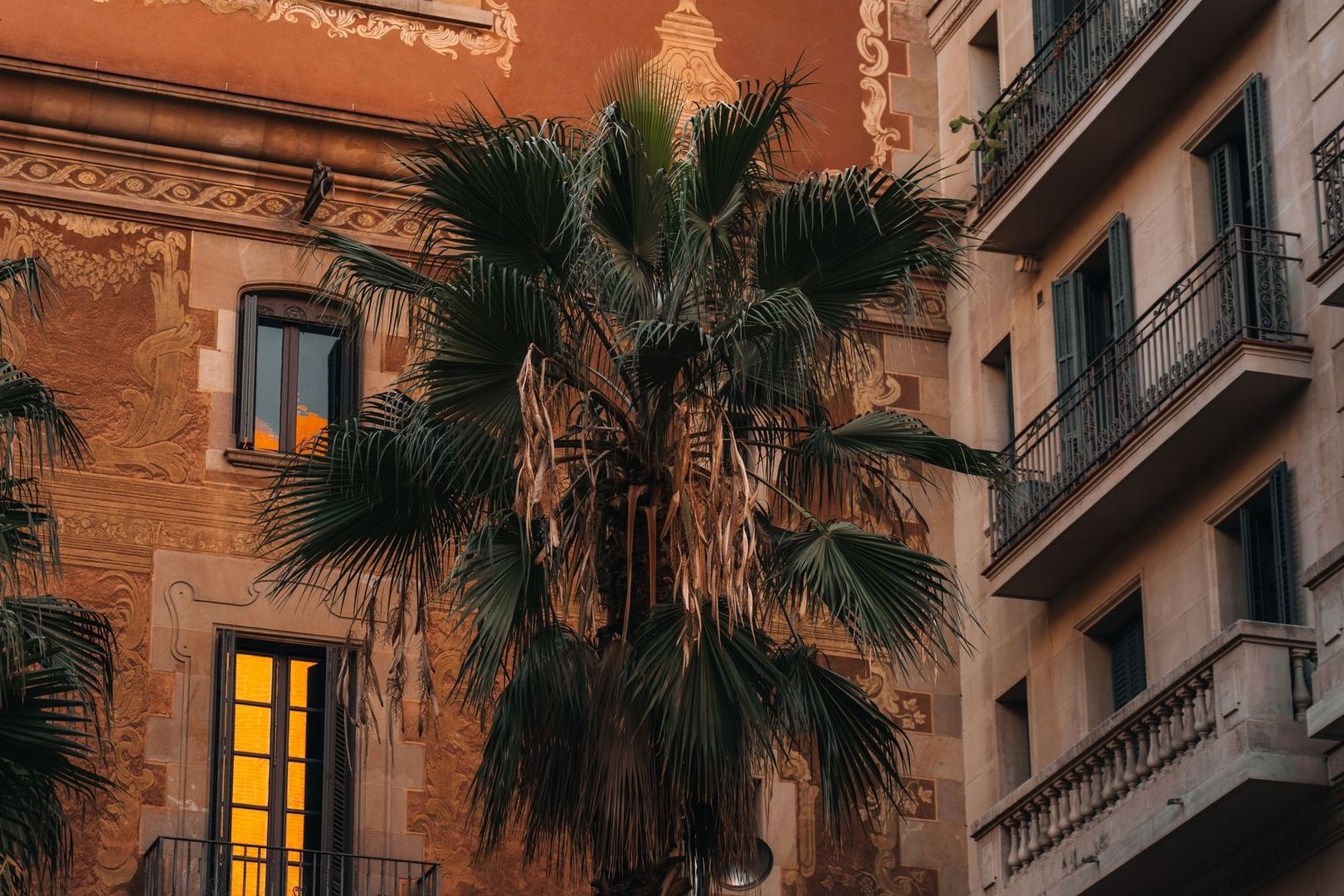
Trachycarpus fortunei, commonly known as the Windmill Palm or Chusan Palm, is one of the most useful choices for a cool, exposed balcony. Native to mountainous regions of central and eastern China, it combines a classic palm silhouette with better cold tolerance than many plants associated with tropical design. Its solitary, fibrous trunk eventually supports a crown of fan-shaped leaves, creating vertical impact without requiring a wide planting bed. Cultivated plants are often kept at a manageable container size, although the species can become much taller when planted in the ground.
For a botanical overview of its mountain origins, leaf structure, and container use, consult the Trachycarpus fortunei pronunciation guide. Keep in mind that cold hardiness is not the same as unlimited exposure tolerance. Strong or cold winds can tear the leaves, and container roots are more vulnerable to freezing than roots insulated by garden soil. The smaller-leaved cultivar Trachycarpus wagnerianus can be particularly appealing where wind is severe, because its stiffer foliage is less prone to dramatic tearing.
Chamaerops humilis, the Mediterranean fan palm, offers a different shape. It is naturally bushy and clustering, often producing several stems from the base. That makes it valuable for lower eye-level screening and for filling the visual gaps around a taller palm. Its growth is usually slower and more compact than the eventual height of a mature Windmill Palm, which suits balconies where scale and access matter. Choose healthy specimens with firm leaves, a stable rootball, and a container size that can be moved safely before placing them permanently.
| Palm choice | Wind tolerance | Typical mature container scale | Best balcony placement |
|---|---|---|---|
| Trachycarpus fortunei | Good, although large leaves may tear in severe gusts | Medium to large, with a tall architectural profile | Protected corner or behind a sturdy balustrade |
| Trachycarpus wagnerianus | Very good because of smaller, stiffer leaves | Medium, often easier to manage than standard T. fortunei | Exposed side of the balcony or near a windward screen |
| Chamaerops humilis | Good once securely established | Medium, broad and multi-stemmed | Lower screening around seating areas |
| Young hardy palm | Moderate until the rootball and crown develop | Small to medium | Sheltered position with temporary winter protection |
Potting and Weighting Essentials to Prevent Tip-Overs
Wind does not simply push against a plant. It catches the leaves like a sail, transfers force down the trunk, and then acts on the entire container. A tall palm with a broad crown can become surprisingly unstable when placed in a lightweight pot, particularly on an upper-floor balcony where gusts arrive from several directions. Stability should therefore be treated as part of plant care, not as an afterthought.
Before buying large palms, check the balcony’s permitted load and ask the building manager, landlord, homeowners’ association, or a structural professional if the information is unclear. A saturated pot can weigh considerably more than a dry one, and the combined load includes the container, ballast, compost, plant, saucer, furniture, and people. Distribute heavy planters rather than concentrating them along one small section of the balcony, and never block drainage outlets or create pressure against fragile railings.
- Choose a broad footprint. Select a heavy terracotta, stone-look, or reinforced composite planter with a low center of gravity. A wide base is usually more useful than an extremely tall, narrow pot.
- Protect the drainage route. Confirm that the container has generous drainage holes. Raise it slightly on stable feet or a suitable platform so excess water can escape without pooling beneath the pot.
- Add controlled ballast. Pea gravel or another approved heavy material can be placed in the lower portion of the container, but do not add weight casually. Account for the finished weight and verify that it remains within the balcony’s safe capacity.
- Use an airy growing mix. Combine a quality loam-based or palm compost with drainage material such as coarse grit, pumice, or perlite. The aim is moisture retention without stagnant air around the roots.
- Center the rootball carefully. Set the palm at the same depth it occupied in its original container. Firm the mix around it without burying the trunk or crown, then water thoroughly to settle the compost.
- Secure the container, not the leaves. Use a discreet anti-tip system or place the planter against a stable wall where permitted. Avoid tying fronds tightly, since this can cause breakage and restrict natural movement.
Excellent drainage is especially important for a balcony palm. Wind can dry the foliage quickly, but cold, wet compost can damage roots just as effectively as drought. Check the container after heavy rain and make sure no saucer remains full for long periods. A simple moisture check several centimetres below the surface is more reliable than watering according to a fixed calendar. During winter, the plant generally needs less water, although it should not be allowed to become bone dry for extended periods.
Designing Tiered Canopy Layers for Total Privacy
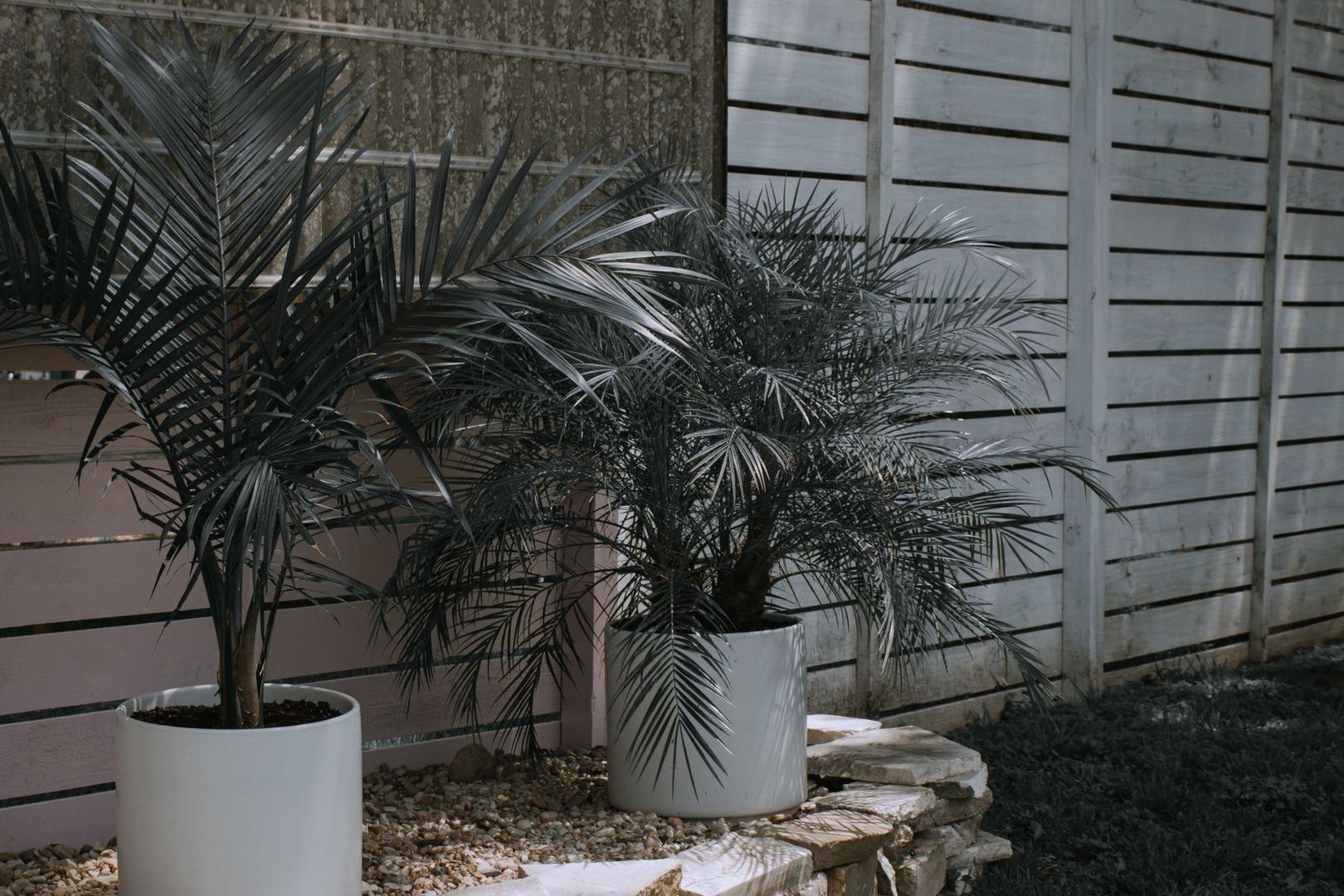
Privacy works best when planting is arranged in layers rather than lined up as a single flat wall. Place the tallest Trachycarpus fortunei or a similarly upright palm toward a corner or beside the most exposed section of balustrade. This creates a visual anchor and interrupts direct views without covering every open edge. If the balcony receives strong prevailing winds, avoid placing the tallest plant where it becomes an isolated target. A corner, side wall, or partial screen can reduce the force reaching the crown.
Build the middle and lower layers around the main palm. The fibrous trunk and crown structure develop gradually, and detailed species information from an authoritative palm reference helps set realistic expectations about eventual form and scale. Use a compact Chamaerops humilis for dense lower growth, then add foliage plants with different leaf shapes to prevent the display from looking like a row of identical pots. Keep every container accessible for watering, inspection, and winter protection.
- Upper layer: Use one tall, upright palm to create height and break direct sightlines from neighboring windows.
- Middle layer: Add smaller palms, tree fern-style foliage where conditions allow, or robust evergreen plants that soften the trunk and pot edges.
- Lower layer: Choose compact, dense plants around seating height, using textured leaves to fill gaps without obstructing movement.
- Side layer: Place one or two plants along the windward edge to deflect gusts, while leaving enough open space for daylight and airflow.
On a narrow balcony, asymmetry usually feels more spacious than a perfectly even arrangement. Cluster plants at one end, keep a clear walking route, and angle foliage toward the sightline that needs blocking most. A palm slightly forward of a corner can conceal a neighboring balcony while still allowing sky and light above it. Pale pots, reflective foliage, and open gaps between crowns also help prevent the space from becoming visually heavy.
Caring for Potted Palms in Elevated Microclimates
Balconies create unusual growing conditions. Wind removes moisture from leaves and compost, while dark paving, concrete, and metal railings can become hot in direct sun. Check plants more frequently during warm, breezy weather, but water deeply only when the mix has begun to dry. A thorough soak encourages roots to explore the full container, whereas frequent small splashes can leave the outer rootball dry while keeping the surface deceptively damp.
During spring and summer, a balanced slow-release palm fertilizer can support fresh foliage and steady growth. Follow the product instructions carefully, since excess fertilizer can damage roots in a container. Remove only dead or badly damaged fronds, using clean tools and leaving green foliage in place. Torn leaves may look untidy after a storm, but they can still contribute to photosynthesis while the plant produces new growth.
- Inspect the crown regularly and treat a firm central spear as a positive sign after cold weather.
- Reduce watering during cool winter periods, while preventing the compost from staying saturated.
- Wrap young or exposed palms with breathable fleece during severe cold, rather than sealing wet foliage in plastic.
- Insulate the sides of containers with horticultural fleece, bubble wrap designed for plant protection, or a purpose-made cover.
- Move smaller pots to the most sheltered balcony position before freezing weather, provided the move can be made safely.
- Check for scale insects or spider mites, especially when plants are stressed by heat, dryness, or limited airflow.
Remember that a container palm is more exposed than the same species planted in the ground. Soil in a garden insulates roots from temperature swings, while a pot can freeze from several sides. Winter protection should focus on the root zone and the central growing point, because damage to the single crown bud can be far more serious than cosmetic leaf browning. Keep protective coverings breathable and remove them during mild, dry spells to prevent dampness from lingering around the crown.
Step Out into Your Own Year-Round Elevated Haven
A windy balcony becomes much easier to manage when design and plant care work together. A broad, well-weighted container reduces the risk of toppling, a free-draining mix keeps roots healthy, and a hardy palm provides the strong vertical shape that turns an empty corner into a garden. Trachycarpus fortunei brings height and classic tropical character, while Chamaerops humilis adds low, bushy screening and useful texture around seating level.
There is no need to complete the transformation in one weekend. Begin with one securely anchored statement palm, watch how wind and sunlight move across the balcony, and then add middle and lower layers where privacy is most needed. Over time, the combination of sturdy containers, resilient foliage, and thoughtful placement can create a sheltered green cocoon for morning coffee, evening relaxation, or a few quiet minutes above the city. Urban gusts may still pass by, but the balcony itself can feel calm, private, and inviting in every season.