
How to Create High-Humidity Havens for Houseplants Without a Humidifier
Why Crisp Leaf Edges Mean It Is Time to Rethink Humidity
Few houseplant problems are as discouraging as finding brown, crispy edges on a once-lush calathea, curled fronds on a fern, or dry-looking new growth on a philodendron. These signs can point to several issues, including inconsistent watering, overly bright light, hard water, drafts, pests, or dry air. During the UK heating season, indoor air often becomes particularly challenging for tropical plants that evolved in warm, humid habitats.
The good news is that a noisy electric humidifier is not the only answer. Bulky appliances need regular cleaning, can collect mineral deposits, and may encourage mould if moisture is allowed to build up around walls, furnishings, or foliage. A more relaxed approach is to create small passive microclimates through thoughtful plant placement, plant grouping, water-filled pebble trays, and naturally steamy rooms. These methods will not turn an entire home into a rainforest, but they can make the immediate surroundings more comfortable for humidity-loving foliage.
The Science of Plant Grouping and Shared Transpiration
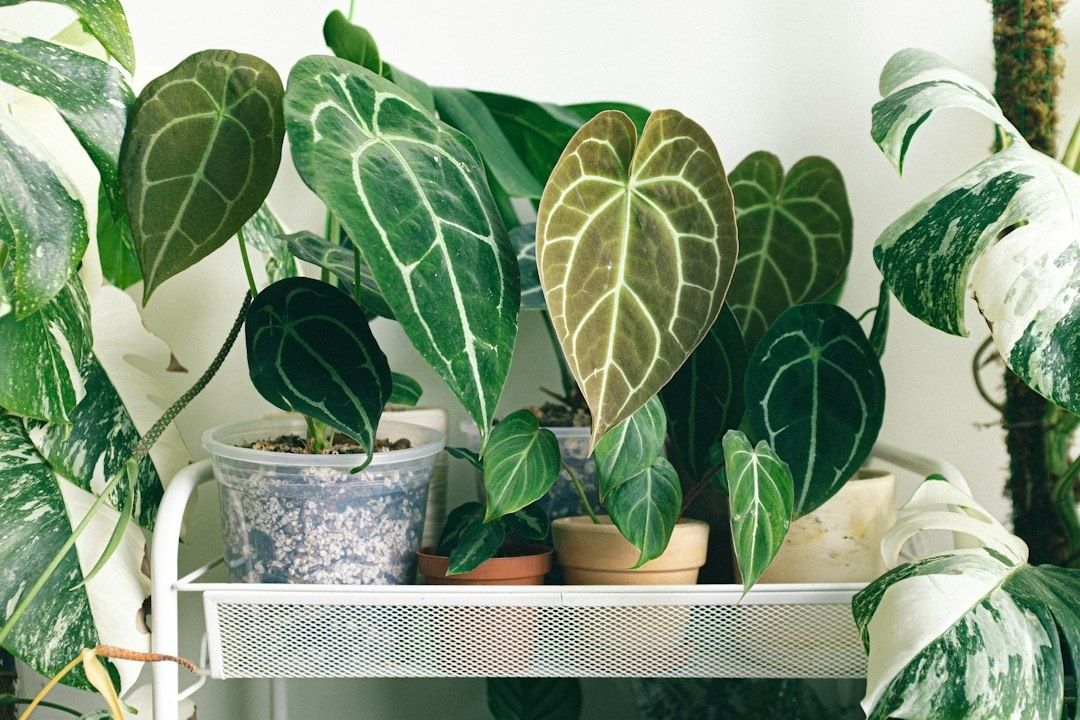
Plants naturally release water vapour through tiny pores called stomata, mainly found on the undersides of leaves. This process, known as transpiration, is part of normal plant function. Water travels from the roots through the plant and eventually escapes into the surrounding air. When several leafy plants stand close together, that moisture can linger around their foliage for longer than it would around a solitary plant placed beside a radiator.
Grouping works best when the plants are arranged in a dense but breathable display. Place taller plants behind smaller specimens, use a plant stand to create different levels, and keep the most humidity-sensitive plants toward the centre of the cluster. The result is a localised pocket of more humid air rather than a sealed environment. It is especially useful for calatheas, ferns, stromanthe, anthuriums, alocasias, and velvet-leaf philodendrons, all of which generally prefer bright indirect light and evenly moist, well-drained compost.
Choose companions with similar needs rather than simply collecting every tropical plant in one corner. A Boston fern or bird”s nest fern can provide a generous leafy anchor, while a calathea, syngonium, or small philodendron fills the lower level. A monstera or kentia palm can add height, provided the light is suitable. Avoid placing a plant that prefers to dry substantially between waterings beside one that needs consistently moist compost, because the grouping should simplify care rather than create conflicting routines.
- Use a broad-leaved or finely textured plant as the centre of the display.
- Raise smaller pots on stands so leaves occupy several levels.
- Leave enough space for air to move between leaves and for routine inspection.
- Keep the cluster away from radiators, cold window gaps, and strong draughts.
- Check each pot individually, since shared air does not mean shared watering needs.
Winter heating can make the difference especially noticeable. Guidance from Penn State Extension on winter humidity explains why heated indoor conditions can be difficult for houseplants and why practical changes to placement and care matter. Grouping will not correct underwatering or poor light, but it can reduce the stress caused by very dry surrounding air.
Building the Perfect Pebble Tray That Actually Works
Misting is popular because it feels quick and refreshing, but its effect on room humidity is brief. Droplets evaporate rapidly, and repeated wetting of leaves can be unhelpful when air circulation is poor. Foliage that remains damp for too long may be more vulnerable to fungal leaf spots, particularly in crowded displays. Misting can occasionally help dislodge dust or discourage some spider mites, but it should not be treated as a lasting humidity solution.
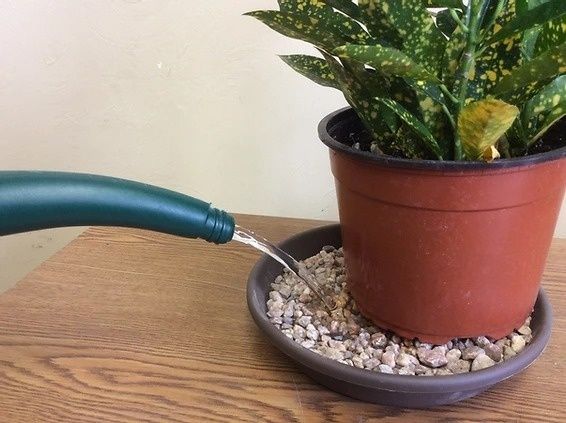
A pebble tray works in a simpler, steadier way. Water sits beneath the pot and evaporates gradually, while the stones keep the container raised above the reservoir. The tray will only create a modest local increase in moisture, so it is most useful beneath or beside a humidity-sensitive plant, or as part of a larger grouped display. The key safety rule is that the base of the pot must never sit directly in the water.
- Choose a shallow, waterproof tray that is wider than the plant pot and stable on its surface.
- Cover the base with washed gravel, decorative pebbles, or LECA, creating an even platform.
- Add water until it sits below the top of the stones, not level with the pot base.
- Place the pot on the raised surface and check that drainage holes remain well above the waterline.
- Top up the reservoir when necessary, but empty and clean the tray regularly to prevent algae, stagnant water, and insect breeding.
Keep the plant in its own well-drained pot rather than planting it directly into the wet tray. This separation matters because roots need oxygen as well as water. Calatheas in particular should be watered according to the compost rather than a fixed calendar. Allow the surface to dry slightly, water thoroughly, and let excess water drain away. The root ball should not become bone dry, but it should never be left standing in water either.
Brown edges can also be linked to water quality. Hard tap water or fluoride-sensitive plants may respond better to rainwater, filtered water, or room-temperature water, where practical. A pebble tray cannot compensate for compacted compost, poor drainage, harsh direct sun, or inconsistent watering, so treat it as one helpful layer in a wider care routine rather than a cure-all.
Steamy Sanctuary Rooms and Passive Microclimates
A bright bathroom can be one of the easiest places to support tropical foliage. Daily showers temporarily raise the room”s moisture level, and the warmth may resemble the conditions many jungle plants prefer. Boston ferns, bird”s nest ferns, calatheas, spider plants, peace lilies, and some syngoniums can all be worth considering when the room receives enough natural light. A windowless bathroom, however, is not a suitable permanent home for live plants unless additional lighting is provided.
Light remains just as important as humidity. A frosted window may soften strong sunlight, while a clear window can provide brighter conditions, but direct midday sun may scorch delicate leaves. Place plants where they receive bright, indirect light and keep them away from cold draughts. Underfloor heating can dry pots more quickly, so inspect compost regularly rather than assuming the bathroom”s humid atmosphere means watering can be reduced or ignored.
Kitchens can offer useful microclimates too. A plant near, but not directly beside, a sink may benefit from occasional moisture in the air. Steam from a kettle or cooking can briefly raise humidity, although plants should not be exposed to sudden blasts of heat, grease, cleaning chemicals, or hot vapour. Leave generous clearance around appliances and choose a position with good natural light and stable temperatures.
| Room condition | Suitable choices | Important caution |
|---|---|---|
| Bright, naturally lit bathroom | Boston fern, calathea, bird”s nest fern, spider plant | Do not rely on humidity if the room is windowless |
| Bright kitchen away from heat | Syngonium, peace lily, monstera, philodendron | Protect leaves from grease, cleaning sprays, and hot steam |
| Warm living room with indirect light | Stromanthe, anthurium, kentia palm, alocasia | Keep plants away from radiators and cold draughts |
| Cooler guest bathroom with occasional use | ZZ plant, spider plant, selected ferns | Choose tougher plants because humidity may fluctuate |
The principle of choosing the right plant for the right place is more valuable than chasing a specific humidity percentage. Horticultural guidance from University of Nebraska experts highlights the importance of matching a room”s light profile with its environmental conditions for sustained plant health. A naturally humid room with poor light is still a poor plant room, while a bright living space with careful grouping may support excellent growth.
Mini Greenhouses and Glass Cloches for Delicate Tropicals
For small or particularly sensitive plants, a glass enclosure can create a powerful passive microclimate. Vintage cloches, apothecary jars, terrariums, and glass-fronted cabinets slow the movement of moisture away from the leaves. In a suitably enclosed space, humidity can rise dramatically, sometimes reaching 80 percent or more, especially after watering or when the plant transpires actively.
Choose an enclosure that gives leaves room to grow and place it in bright, indirect light. Direct sun can heat glass quickly and scorch the plant inside. A cabinet or jar should never be treated as maintenance-free. Wipe away excessive condensation, open a lid or door for part of the day, and look closely at the foliage whenever the enclosure is checked.
- Clear, heavy condensation on every surface suggests that more ventilation is needed.
- Soft stems, blackened patches, or a sour smell can indicate excessive moisture or poor airflow.
- Dry leaves and no condensation may mean the enclosure is too open, too warm, or positioned near a draught.
- Small moving pests, webbing, or sticky residue should prompt immediate inspection and isolation.
- Keep foliage from touching wet glass, as constant contact can encourage damage and disease.
Delicate calatheas, young ferns, small anthuriums, and humidity-loving cuttings may respond well to this approach. Ventilation is the balancing act: the aim is to hold moisture around the plant without creating stagnant, waterlogged air. A few minutes of daily air exchange can make a meaningful difference, particularly in a warm room or densely planted cabinet.
Enjoy Lush Jungle Foliage All Year Round
Natural humidity care is less about one dramatic intervention and more about creating a series of small advantages. Group plants so their transpiration supports a shared pocket of moisture, use a correctly built pebble tray to keep water below the pot, and take advantage of bright bathrooms or sheltered kitchen positions. For especially delicate specimens, a ventilated glass enclosure can provide an even more concentrated refuge.
Begin with one plant that is showing dry edges and move it to a brighter, more stable position. Add compatible companions, inspect the compost before watering, and watch how the leaves respond over the next few weeks. Exact humidity readings can be useful, but they are not the only measure of success. Firm new growth, steady colour, clean leaves, and soil that dries at a sensible rate are often more helpful clues. With a little observation and thoughtful placement, a home can support lush tropical foliage without turning plant care into another noisy household chore.