
How to Light Exotic Foliage at Night for Maximum Drama
Transforming Architectural Jungle Foliage After Dark
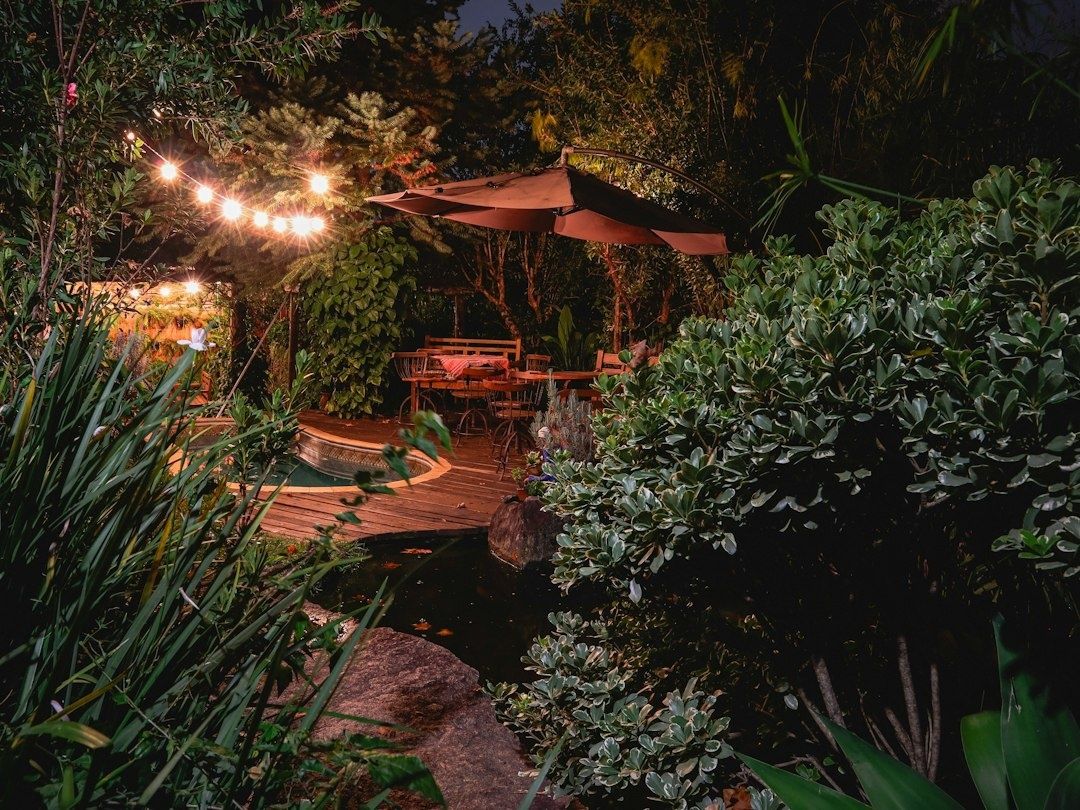
Bold tropical foliage can look spectacular by day, but the right lighting can give it an entirely new personality after sunset. A banana leaf, bamboo cane, or glossy Fatsia leaf has a strong shape that deserves more than a bright wash from a generic security lamp. Carefully placed illumination can reveal the curves, textures, and shadows that daylight often makes easy to overlook. The principles described in landscape lighting offer a useful starting point, but the most effective garden schemes remain simple, selective, and tailored to the plants themselves.
The good news is that creating atmosphere does not require a complicated installation or a garden full of glowing fixtures. A single warm spotlight aimed through a large leaf can create a sculptural effect, while a low glow behind bamboo can turn a plain fence into a dramatic backdrop. The aim is to move beyond flat, intrusive security lighting and create pockets of evening interest. At the same time, a thoughtful scheme should respect the garden”s natural rest, keeping glare low, limiting unnecessary hours, and ensuring that wildlife still has access to darkness.
Understanding Light Temperature and Beam Spread for Big Leaves
Light colour has a noticeable effect on how exotic foliage appears. Warm white light, generally around 2700K to 3000K, brings out the richness of green leaves and creates a relaxed, inviting mood. It tends to sit comfortably alongside timber, brick, stone, and planting, rather than making the garden feel like a commercial space. Cooler daylight-style lamps can look crisp, but their blue-white appearance may make foliage seem sterile or clinical, particularly when several fixtures are used together.
Beam spread is equally important. A broad leaf needs room for its shape to appear, while a narrow beam is better suited to a trunk, stem, or slim architectural feature. As a simple guide, consider the following:
- Choose a wide beam of around 60 degrees or more for broad banana, colocasia, and gunnera leaves.
- Use a medium beam for clumps of foliage where several leaves need to be picked out without lighting the entire bed.
- Select a narrow spot for bamboo canes, individual stems, tree trunks, or a precise silhouette.
- Test the fixture from several positions before securing it, since a small change in angle can reveal veins, folds, and translucent edges.
Positioning matters more than sheer brightness. A light placed slightly behind a leaf can make its veins glow, whereas a fixture aimed directly at the front may flatten the surface and remove useful shadows. Fixtures should generally be hidden among planting or behind edging so that the light source itself is not the first thing the eye notices. For further practical guidance on using shadows, backlighting, and low-level illumination responsibly, consult the RHS guide, How to light your garden.
Three Dramatic Techniques for Jungle Plants
Uplighting works especially well with large-leaved plants such as Musa basjoo. Place a small spotlight behind the main stem or just beyond the base of the clump, then aim it upward through the leaves. The light will pick out the central midribs and the irregular edges, giving the plant a layered, almost theatrical appearance. Keep the beam soft enough to avoid bleaching the foliage, and avoid placing the fixture so close that every leaf becomes an equally bright flat shape.
Bamboo offers a different opportunity. The vertical canes of Phyllostachys can be silhouetted against a pale fence, rendered wall, or other light-coloured surface. Position the light low and behind the clump, aiming toward the background rather than directly at the viewer. For Fatsia japonica, cross-lighting is particularly effective. Two modest fixtures placed on opposite sides of the plant can reveal its glossy surface, overlapping lobes, and strong shadows, creating depth without requiring high output.
| Plant or feature | Suggested position | Beam approach | Visual effect |
|---|---|---|---|
| Musa basjoo | Behind the stem or just behind the clump | Wide to medium upward beam | Glowing veins and layered leaf silhouettes |
| Phyllostachys bamboo | Low and behind the canes | Narrow or medium beam toward a pale background | High-contrast vertical shadows |
| Fatsia japonica | Opposite sides of the plant | Two medium cross-lighting beams | Glossy texture and multidimensional depth |
| Gunnera or colocasia | Low at the front or side of the plant | Wide beam of 60 degrees or more | Broad leaf outlines and dramatic surface folds |
Layering several modest effects usually looks more natural than relying on one powerful lamp. A low glow can establish the outline of a planting group, while a slightly brighter accent picks out one special leaf or trunk. This approach also gives the garden a sense of depth, because the eye moves between foreground foliage, middle-distance shapes, and darker areas beyond. Keep some spaces unlit, since contrast is what makes the illuminated plants feel dramatic.
Choosing Low Voltage and Flexible Power Systems
For many home gardens, a 12V low-voltage system offers a practical balance of safety, flexibility, and ease of installation. It reduces the electrical risk associated with outdoor mains-powered equipment and works well around damp soil, dense planting, children, and pets when the components are correctly rated and installed. LED fixtures also use relatively little electricity, produce less heat than older lamp types, and generally need less frequent replacement. A transformer converts household power to the lower voltage required by the lighting circuit.
Even with low-voltage equipment, outdoor electricity should be treated carefully. Use products designed for exterior conditions, protect connections from standing water, and follow the manufacturer”s installation instructions. A qualified electrician should be consulted when transformer sizing, cable routing, outdoor sockets, or local electrical requirements are uncertain. Systems with modular connectors can make future changes easier, particularly when a tropical bed expands and the original layout no longer suits the plants.
Flexible fixtures are especially useful for exotic foliage because growth is rarely predictable. Ground stakes can be moved as a banana clump widens, and adjustable heads allow the beam to follow leaves that rise or spread through the season. Smart controls may also provide dimming, scheduling, and colour adjustment, although warm white remains the most dependable choice for a calm, natural-looking display. Solar lights can be useful for small accents or areas where cabling is impractical, but their brightness and operating time depend on daylight exposure and battery capacity.
- Start with a transformer that has suitable capacity for the planned fixtures, leaving room for modest future additions.
- Choose adjustable heads and removable stakes so the design can change with plant growth.
- Keep cable routes accessible rather than burying every connection permanently at the first attempt.
- Use timers or smart controls to avoid leaving lights on throughout the night.
- Inspect fittings after severe weather and remove leaves or mulch that have covered the light source.
Protecting Night Wildlife While Enjoying the Drama
Night-time darkness is not simply an absence of decoration. Many garden animals depend on it for feeding, navigation, rest, and reproduction. Pollinating insects can be attracted to artificial light and may waste energy circling fixtures, while bats and other nocturnal wildlife can alter their movement around brightly lit areas. For that reason, the most wildlife-friendly design uses light only where it adds clear value and leaves generous parts of the garden dark.
Direction is one of the easiest ways to reduce disturbance. Fit cowls, shields, or snoots where available, and aim beams downward or across foliage rather than into the sky. Keep fixtures low, hide them behind leaves or edging, and avoid illuminating ponds, water margins, and areas known to support nocturnal activity. Warm colours, particularly soft red, orange, or warm yellow tones, are generally preferable to blue-heavy cool light. The RHS recommendations in its wildlife-conscious lighting advice also emphasise limiting light, directing it carefully, and switching it off at night.
- Identify the one or two plants that deserve attention, rather than lighting the whole border.
- Place each fixture low and check the view from neighbouring windows, paths, and the wider garden.
- Add a shield or cowl if the lamp is visible or sends light above the planting.
- Set an automatic timer so the display switches off when the household goes indoors.
- Review the effect after dark and remove any fixture that creates glare, illuminates a pond, or appears to disturb wildlife.
Short operating periods are often enough to enjoy the garden during dinner, a late cup of tea, or a few minutes outside after work. Turning the lights off later protects the darker parts of the garden and reduces energy use. It also makes the illuminated period feel more special, because the foliage returns to shadow rather than becoming a permanent background feature.
Step Outside and Enjoy Your Night Garden Oasis
Architectural plants can become remarkable evening sculptures with surprisingly little equipment. Warm 2700K to 3000K light flatters green foliage, wide beams reveal broad leaves, and narrow beams give definition to bamboo or individual stems. Backlighting, silhouetting, and cross-lighting each produce a different mood, while low-voltage systems make it easier to adjust the arrangement as exotic plants grow.
Begin with one portable fixture and experiment before committing to trenches, permanent cable routes, or a large collection of fittings. Try the light from the front, side, and behind the plant, then step back to inspect the shadows and the amount of glare. Once the best angle becomes clear, add only what the composition needs. A warm drink, a low-level glow, and a few carefully lit tropical leaves can turn an ordinary patio view into a peaceful personal jungle haven.