
How to Keep Calathea Leaves Lush Without Brown Edges
Why Your Calathea Develops Crispy Brown Edges
Few houseplant disappointments are quite as dramatic as bringing home a magnificent Calathea, admiring its painted leaves, and then noticing crispy brown margins only a few weeks later. The leaves may curl, the colours can look less vibrant, and every new brown tip feels like evidence that something has gone badly wrong.
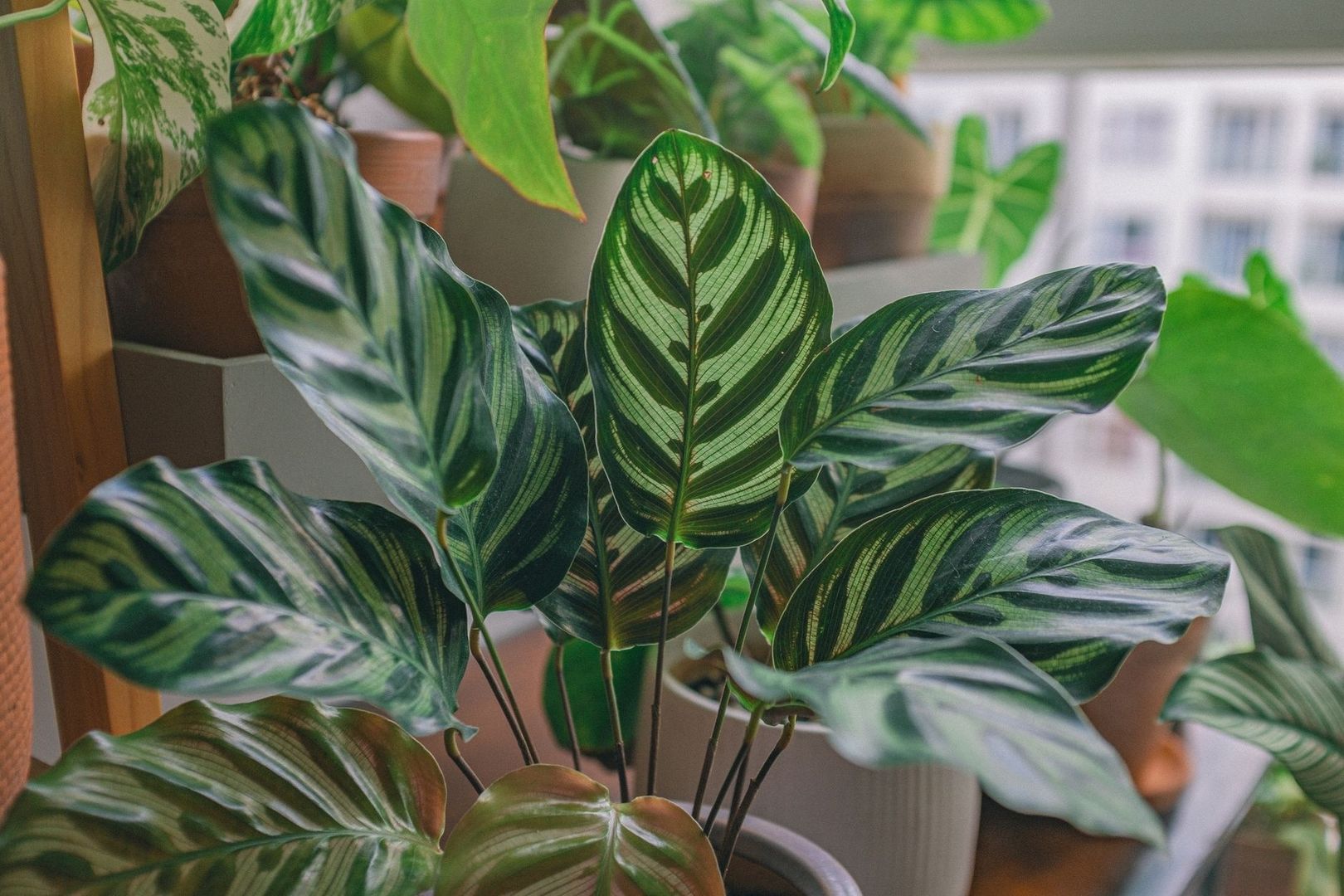
The good news is that brown edges are usually an early distress signal, not a plant death sentence. Calatheas evolved on the warm, humid rainforest floor, where light is softened by a leafy canopy, moisture is steady, and water contains far fewer household minerals than many indoor supplies. Understanding their rainforest habitat within the wider Marantaceae family explains why their delicate foliage can react so quickly to modern rooms. In most homes, three low-stress adjustments make the biggest difference: use gentler water, create steady ambient humidity, and provide bright but indirect light.
Ditching the Tap Water Trap
Water quality is one of the most overlooked causes of brown Calathea tips. Standard UK tap water can contain chlorine, fluoride, calcium, magnesium, and other dissolved minerals. While these levels are generally suitable for people, sensitive foliage may respond poorly when salts and minerals accumulate in the compost or move towards the leaf margins through the plant”s water-conducting tissues. The result can be a dry, scorched-looking edge, even when the plant is being watered regularly.
Leaving tap water in an open jug overnight is often suggested as a simple solution, but it does not remove every problematic compound. Some chlorine may dissipate, yet fluoride and dissolved minerals remain. Resting water can therefore be better than using very cold water straight from the tap, but it should not be treated as a reliable way to make hard water mineral-free.
Fortunately, a costly specialist system is not essential. Choose the most convenient option available and keep the supply consistent. Room-temperature or slightly lukewarm water is kinder to the roots than icy water.
- Rainwater: Collect clean rainwater in a covered container and use it when it is fresh and free from visible debris.
- Filtered water: A household filter can reduce some chlorine and minerals, although performance varies, so observe how the plant responds.
- Dehumidifier run-off: This may be suitable when collected hygienically in a clean machine, but avoid using water from a dirty tank or one containing cleaning residues.
- Distilled water: This is a dependable low-mineral choice, although plants grown with very low-mineral water still benefit from appropriate, modest fertilisation during active growth.
Water thoroughly until a little drains from the pot, then empty the saucer. This flushes some accumulated salts while ensuring the root ball is moistened evenly. Always check the compost first rather than watering by calendar. Calatheas prefer evenly moist conditions, but constantly saturated compost leaves roots short of oxygen and can lead to yellowing, root damage, and fungus gnats.
Smart Ambient Humidity Without Messy Misting Regimes
Calatheas enjoy humid air, but humidity works best when it is steady rather than delivered in occasional bursts. Hand misting may wet the leaf surface for a short time, yet it rarely raises room humidity meaningfully. Repeatedly damp foliage can also encourage fungal spotting, particularly where air movement is poor. Misting may be useful as a temporary cleaning routine or to discourage some spider mites, but it is not a dependable substitute for a humid environment.
A gentle microclimate is usually more practical. Several plants placed near one another release moisture through transpiration, allowing the air around their leaves to remain slightly more humid. This does not turn a dry room into a rainforest, but it can soften the extremes created by central heating, air conditioning, or draughts. A bathroom or kitchen with good natural light may also provide a naturally comfortable setting, provided the plant is kept away from cold drafts and direct heat.
Try grouping Calatheas with other moisture-loving plants, while leaving enough space for air to move between leaves. A cramped, stagnant cluster can create its own problems, so the goal is a calm pocket of humidity, not a tightly packed wall of foliage.
- Choose a shallow tray that is wider than the plant pot and stable enough to support it safely.
- Add a layer of pebbles or gravel across the tray, creating a raised surface for the pot.
- Pour in water until it sits just below the top of the pebbles. The pot base must remain above the waterline.
- Place the pot on the pebbles, checking that drainage holes cannot sit directly in standing water.
- Refresh the water regularly and clean the tray so algae, insects, and stale odours do not develop.
As the water evaporates, it gently increases moisture immediately around the plant. A pebble tray cannot compensate for severely dry air, and it should never be used to disguise poor watering or drainage, but it is inexpensive, silent, and easy to fit into a home. The most important improvement is consistency: moderate humidity combined with evenly moist compost is far more useful than dramatic changes from one day to the next.
Finding the Sweet Spot for Filtered Canopy Light
Calatheas need light to grow, but their patterned leaves are not designed for intense, unfiltered sun. Bright indirect light usually means placing the plant near a bright window where sunlight reaches the room, rather than directly onto the leaves for hours. A direct south- or west-facing windowsill can heat the foliage and cause bleached markings, brown patches, faded colours, and crisp margins.
Low light is not automatically safe either. Calatheas may tolerate softer conditions, but prolonged darkness can produce slow growth, smaller leaves, weaker stems, and less vivid patterning. Sudden curling, washed-out designs, or a plant that appears to be turning away from the window may indicate that the light is too intense. If the compost is adequately moist and the water quality is good, examine the position before changing several other care habits at once.
Place the plant close to an east-facing window for gentle morning light, or set it a little farther back from a brighter south- or west-facing window. Sheer curtains are especially helpful because they recreate the dappled quality of a rainforest canopy while keeping the room bright. The North Carolina Extension guide to Goeppertia veitchiana also highlights the importance of suitable light for preserving this type of decorative foliage.
- Good placement: Near a bright east-facing window or behind a sheer curtain.
- Use caution: On an unshaded south- or west-facing sill during strong summer sun.
- Avoid: Radiators, heating vents, cold draughts, and rooms with sharp temperature fluctuations.
- Watch the leaves: Faded patterns and bleached patches suggest excessive light, while sparse growth suggests insufficient light.
Move a stressed Calathea gradually rather than shifting it from deep shade into intense brightness in one step. A small change of position can be enough. Give the plant several weeks to produce healthier new growth, since already damaged tissue will not regain its original colour.
Quick Diagnostics for Calathea Foliage Troubles
Brown edges can have several overlapping causes, so look at the whole plant rather than diagnosing from one symptom alone. Check the compost, roots, room conditions, recent changes, and the newest leaves. New growth is especially valuable evidence because it shows whether the current routine is improving.
| Leaf symptom | Likely indoor trigger | First adjustment |
|---|---|---|
| Crispy brown tips and margins | Mineral-heavy water, dry air, or inconsistent moisture | Use filtered or rainwater and keep compost evenly moist |
| Bleached patches or faded markings | Strong direct sunlight | Move behind a sheer curtain or farther from the window |
| Curled, limp, dry-feeling leaves | Underwatering, low humidity, heat, or intense light | Check the root ball and move away from heat and harsh sun |
| Yellow, soft, or translucent leaves | Overwatering, poor drainage, or damaged roots | Allow excess water to drain and inspect the compost and pot |
| Small insects or persistent wet compost | Overly damp soil and weak airflow | Let the surface begin to dry and improve drainage |
Unsightly dry margins can be trimmed for a tidier appearance, although pruning cannot reverse the original stress. Use sharp snips cleaned with household disinfectant or rubbing alcohol. Follow the natural curve of the leaf and leave a very narrow line of brown tissue rather than cutting into healthy green areas. Removing an entire leaf is appropriate only when it is mostly damaged, yellowing badly, or no longer contributing much to the plant.
Keep the soil moist but never waterlogged. A free-draining mix with moisture-retentive material and added perlite can hold enough water for the roots while preserving air spaces. Water when the upper layer has begun to dry, then drain the pot thoroughly. In cooler or darker months, growth slows and watering usually needs to reduce, but the compost should not be allowed to become completely dry.
Enjoy Vibrant Tropical Leaves Every Day
Calatheas often recover more readily than their dramatic foliage suggests. Once mineral buildup, dry air, or harsh light is corrected, the plant can settle into a calmer rhythm. Existing brown tissue will remain damaged, but healthier new leaves are the clearest sign that the routine is working. Resist the temptation to change everything at once; steady care makes it easier to identify which improvement has helped.
Start with one practical adjustment today. Switch to filtered water, move the pot behind a sheer curtain, or gather a few companion plants around it. Over time, the familiar daily movement of prayer plant foliage, opening by day and lifting at night, becomes a rewarding reminder that small environmental changes matter. With gentle light, reliable moisture, and a comfortable pocket of humidity, lush tropical growth can become a simple and enjoyable part of everyday indoor life.